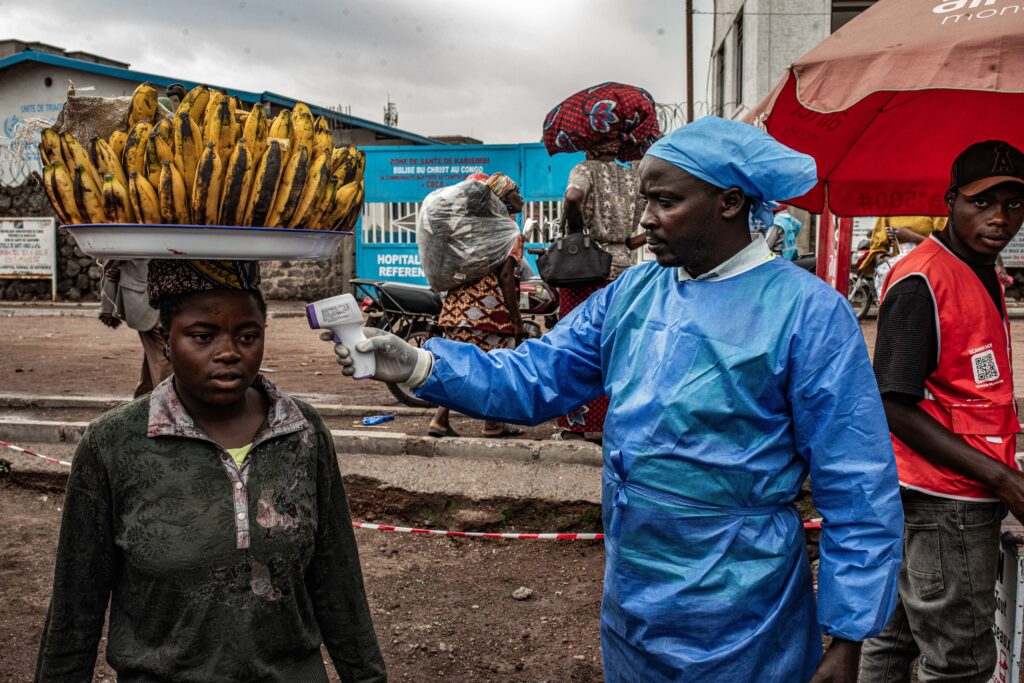
GOMA, DEMOCRATIC REPUBLIC OF CONGO - JUNE 24: A health worker takes a woman's temperature as part of Ebola screening efforts on June 24, 2026 in Goma, Democratic Republic of Congo. On Monday, UN agencies announced that Ebola cases in the Democratic Republic of Congo had surpassed 1,000. Although testing capacity has recently improved, surveillance and contact tracing remain constrained by insecurity and restricted access in Ituri province, the heart of the current outbreak, north of Goma. (Photo by Daniel Buuma/Getty Images)
The recent Ebola outbreak in the Democratic Republic of the Congo (DRC) has raised significant concerns due to its strain that currently lacks specific treatments or preventive measures. With a history of deadly outbreaks, the DRC is once again at the forefront of public health challenges, stirring alarm both locally and globally about the potential implications of this virus.
In an encouraging development, three clinical trials are underway that may offer hope against the ongoing Ebola strain. Health officials and researchers are mobilizing resources to test new therapeutics aimed at combating this stubborn virus. These trials represent a crucial step in the global fight against contagious diseases and could significantly alter the treatment landscape for Ebola if proven effective. With thousands potentially affected, the stakes are high as the DRC government collaborates with international organizations to coordinate responses and disseminate urgent information to those in contact with the outbreak.
For Americans concerned about public health, this outbreak serves as a reminder of the interconnectedness of disease trends. As reported by health experts, including Dr. Tom Frieden, former director of the CDC, “Investing in research and preparedness against infectious diseases is vital not only locally but globally.” The outcome of these clinical trials will not only inform treatment protocols in the DRC but will also influence how future outbreaks may be managed worldwide. Consequently, this affects businesses involved in pharmaceutical development, travel sectors, and healthcare services, as heightened vigilance and potential travel restrictions might impact operations and planning.
This situation in the DRC emphasizes a larger trend seen in the U.S. and Canada regarding the increasing threat of infectious diseases. Public health systems across North America are assiduously monitoring such outbreaks, as emerging pathogens can often lead to widespread consequences. The need for robust public health infrastructure and investment in innovation has never been more pressing. As experts highlight, “Preparedness is our best defense against contagious diseases, and we must continue to learn from these outbreaks.”
As we follow the developments in DRC and the outcomes of the clinical trials, there are several questions readers should consider: What preventive measures are being implemented at home to prepare for potential outbreaks? How do international health trends influence local policies? Are there any updates from the CDC regarding contagion alerts or recommendations for travelers?
By staying informed, we can make smarter long-term decisions about our health and well-being.
——————–
El reciente brote de Ébola en la República Democrática del Congo (RDC) ha suscitado preocupaciones significativas debido a su cepa que actualmente carece de tratamientos o medidas preventivas específicas. Con una historia de brotes mortales, la RDC está nuevamente en el centro de los desafíos de salud pública, generando alarma tanto a nivel local como global sobre las posibles implicaciones de este virus.
En un desarrollo alentador, se están llevando a cabo tres ensayos clínicos que pueden ofrecer esperanza contra la cepa de Ébola en curso. Los funcionarios de salud e investigadores están movilizando recursos para probar nuevas terapias destinadas a combatir este terco virus. Estos ensayos representan un paso crucial en la lucha global contra las enfermedades contagiosas y podrían alterar significativamente el panorama de tratamiento para el Ébola si resultan eficaces. Con miles de personas potencialmente afectadas, los riesgos son altos, ya que el gobierno de la RDC colabora con organizaciones internacionales para coordinar respuestas y difundir información urgente a aquellos en contacto con el brote.
Para los estadounidenses preocupados por la salud pública, este brote sirve como un recordatorio de la interconexión de las tendencias de enfermedades. Como reportaron expertos en salud, incluido el Dr. Tom Frieden, exdirector de los CDC, “Invertir en investigación y preparación contra enfermedades infecciosas es vital no solo a nivel local, sino global.” El resultado de estos ensayos clínicos no solo informará los protocolos de tratamiento en la RDC, sino que también influirá en cómo se pueden gestionar futuros brotes en todo el mundo. En consecuencia, esto afecta a las empresas involucradas en el desarrollo farmacéutico, los sectores de viajes y los servicios de salud, ya que una vigilancia aumentada y posibles restricciones de viaje podrían impactar operaciones y planificación.
Esta situación en la RDC enfatiza una tendencia más amplia observada en EE. UU. y Canadá respecto a la creciente amenaza de enfermedades infecciosas. Los sistemas de salud pública en Norteamérica están vigilando atentamente tales brotes, ya que los patógenos emergentes pueden llevar a consecuencias generalizadas. La necesidad de una infraestructura de salud pública robusta y la inversión en innovación nunca ha sido tan urgente. Como destacan los expertos, “La preparación es nuestra mejor defensa contra las enfermedades contagiosas, y debemos continuar aprendiendo de estos brotes.”
Mientras seguimos los desarrollos en la RDC y los resultados de los ensayos clínicos, hay varias preguntas que los lectores deberían considerar: ¿Qué medidas preventivas se están implementando en casa para prepararse para posibles brotes? ¿Cómo influyen las tendencias de salud internacional en las políticas locales? ¿Hay alguna actualización de los CDC con respecto a los alertas de contagio o recomendaciones para los viajeros?
Al estar informados, podemos tomar decisiones más inteligentes a largo plazo sobre nuestra salud y bienestar.